

Specialized Sacroiliitis Treatment in San Antonio, TX
Dr. Darius Zagunis, MD, at San Antonio Pain Consultants in San Antonio, TX, provides personalized evaluation and treatment for patients experiencing sacroiliitis-related pain, stiffness, and limited mobility. Care focuses on identifying the source of sacroiliac joint inflammation and creating a customized plan that may include physical therapy, medication management, targeted injections, or other interventional pain treatments based on each patient’s symptoms and health needs. For more information, contact us today or book an appointment. We are conveniently located at 3903 Wiseman Blvd, Ste 117, San Antonio, TX 78251.
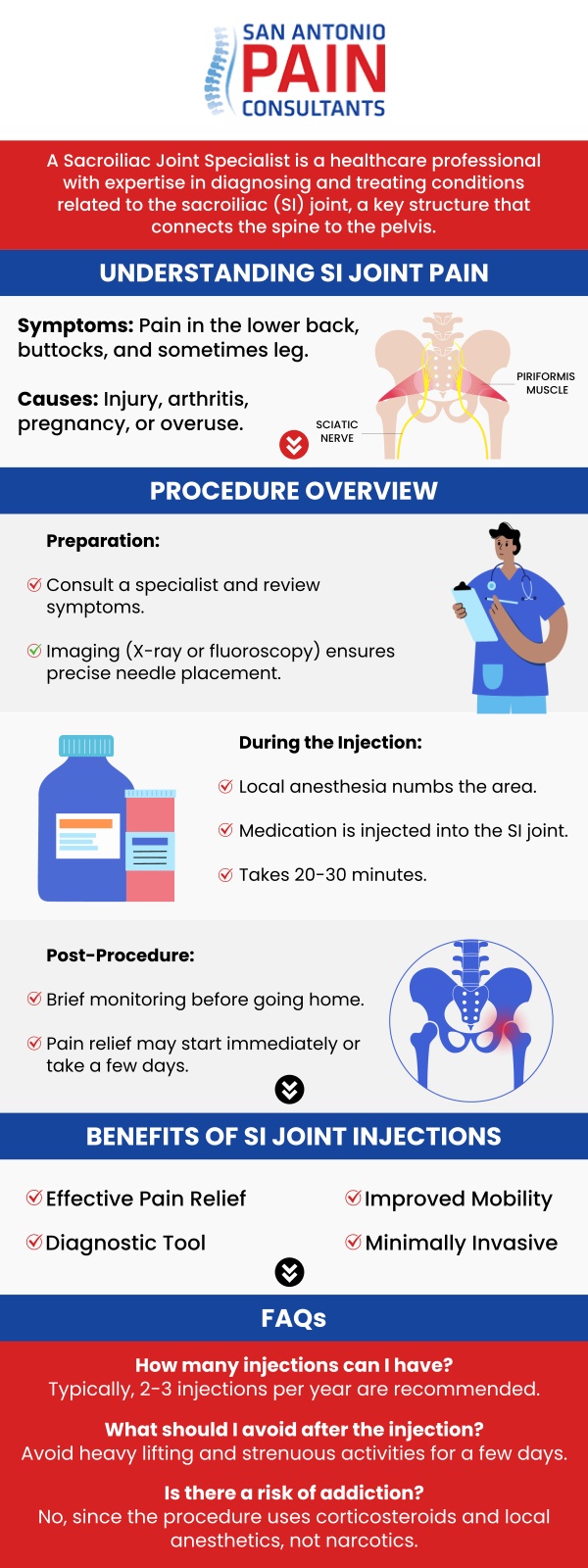
Table of Contents:
What does sacroiliitis mean and how does it affect the sacroiliac joint?
Why does inflammation occur in the sacroiliac joints?
What is the function of the sacroiliac joint in the body?
How may sacroiliitis contribute to pain in the lower back, pelvis, or hips?
How can I recognize the symptoms associated with sacroiliitis?
Can sacroiliac joint inflammation cause discomfort in the buttocks or legs?
What movement-related challenges can occur with sacroiliitis?
When should persistent sacroiliac joint symptoms be evaluated?
What are the common reasons behind sacroiliac joint inflammation?
How can arthritis or other joint conditions contribute to sacroiliitis?
Can pelvic changes or certain life stages affect sacroiliac joint function?
Which factors may make someone more susceptible to sacroiliitis?
How do healthcare providers identify and diagnose sacroiliitis?
What takes place during a clinical evaluation for sacroiliac joint concerns?
How can imaging help detect inflammation in the sacroiliac joints?
How do specialists confirm that symptoms are coming from the sacroiliac joint?
What are the available approaches for treating sacroiliitis symptoms?
How may physical therapy help improve comfort and movement with sacroiliitis?
What care methods can help manage sacroiliac joint-related discomfort?
How does a customized treatment plan help improve mobility?
How can San Antonio Pain Consultants help patients seeking sacroiliitis treatment in San Antonio, TX?
Sacroiliitis refers to inflammation in one or both sacroiliac joints, which connect the sacrum at the base of the spine to the pelvis. When these joints become irritated, patients may experience pain, tenderness, and stiffness in the lower back, hips, buttocks, pelvis, or upper legs, especially during standing, walking, bending, or changing positions.
Inflammation in the sacroiliac joints may develop because of arthritis, repetitive stress, physical strain, infection, pregnancy-related changes, or conditions that affect the immune system. Disorders such as ankylosing spondylitis, psoriatic arthritis, Crohn’s disease, and ulcerative colitis may also contribute to ongoing sacroiliac joint inflammation.
The sacroiliac joints connect the lower spine to the pelvis and help transfer the weight of the upper body to the legs. Although these joints allow only limited movement, they play an important role in maintaining pelvic stability, absorbing physical forces, and supporting activities such as walking, standing, bending, lifting, and climbing stairs.
Inflammation can irritate the joint surfaces, ligaments, and nearby tissues, leading to aching, stiffness, tenderness, or sharp pain near the base of the spine. The discomfort may spread into the pelvis, buttocks, hips, groin, thighs, or legs and can sometimes be mistaken for sciatica or another lower back or hip condition.
Sacroiliitis symptoms commonly include pain or stiffness in the lower back, buttocks, hips, or pelvis, which may affect one side or both sides of the body. Discomfort may become worse after prolonged sitting or standing, climbing stairs, running, taking long steps, rotating the hips, or placing more weight on one leg.
Sacroiliac joint inflammation can cause pain in the buttocks because the joints are located directly beneath this area. The discomfort may also spread into the hips, groin, thighs, or legs, although a medical evaluation is needed to determine whether the symptoms are caused by sacroiliitis, nerve irritation, or another musculoskeletal condition.
Sacroiliitis may make it uncomfortable to walk, climb stairs, bend, lift, stand from a seated position, turn in bed, or remain seated or standing for long periods. Some patients may also change the way they walk or distribute their weight, which can place additional pressure on the hips, lower back, and surrounding muscles.
Sacroiliac joint symptoms should be evaluated when pain persists, repeatedly returns, becomes more intense, or interferes with sleep, work, exercise, or normal movement. Prompt medical attention is especially important when pain is accompanied by fever, weakness, numbness, unexplained weight loss, or changes in bladder or bowel function.
Arthritis may damage or inflame the surfaces of the sacroiliac joints, leading to stiffness and persistent pain. Osteoarthritis can gradually wear down the joint structures, while inflammatory conditions such as ankylosing spondylitis, axial spondyloarthritis, and psoriatic arthritis may trigger immune-related inflammation in one or both joints.
Pregnancy and the postpartum period can affect sacroiliac joint function because hormonal changes loosen the pelvic ligaments while weight gain and changes in posture place additional stress on the joints. These changes may temporarily reduce pelvic stability and contribute to pain during walking, standing, turning, or other daily movements.
Risk factors may include inflammatory arthritis, inflammatory bowel disease, pregnancy, previous joint damage, repetitive pelvic stress, altered walking patterns, or activities involving frequent bending, lifting, running, or twisting. The presence of a risk factor does not confirm sacroiliitis, but it can provide useful information during a medical evaluation.
Healthcare providers diagnose sacroiliitis by reviewing the patient’s symptoms, medical history, activity level, and existing health conditions, followed by a physical examination of the lower back, pelvis, hips, and legs. Imaging, blood tests, or diagnostic procedures may be recommended to identify inflammation and rule out other causes of pain.
During a clinical evaluation, the provider may examine posture, walking pattern, flexibility, strength, range of motion, and areas of tenderness around the pelvis. Specific movements or gentle pressure may be used to reproduce the patient’s usual pain and determine whether the sacroiliac joint is likely contributing to the symptoms.
X-rays may reveal structural changes, joint narrowing, or signs of long-term inflammation, while CT scans provide more detailed images of the bones and joint surfaces. MRI scans may detect active inflammation or early changes that are not yet visible on standard X-rays, although imaging results must be considered alongside symptoms and examination findings.
Specialists compare the patient’s pain pattern, physical examination findings, medical history, and imaging results while ruling out conditions involving the lumbar spine, hips, muscles, or nerves. In certain cases, an image-guided diagnostic injection may be used, and temporary pain relief can indicate that the sacroiliac joint is contributing to the symptoms.
Treatment may include activity modification, physical therapy, targeted exercises, heat or cold therapy, and medications selected according to the patient’s health needs. Persistent symptoms may be treated with sacroiliac joint injections, radiofrequency ablation, or other interventional pain procedures, while surgery is generally considered only when conservative treatments have not provided adequate relief.
Physical therapy can strengthen the muscles surrounding the pelvis, abdomen, lower back, and hips to improve stability and reduce unnecessary strain on the sacroiliac joints. Treatment may also include stretching, posture correction, movement training, and exercises designed to improve flexibility, balance, and tolerance for daily activities.
Sacroiliac joint discomfort may be managed by avoiding movements that repeatedly aggravate the area, alternating activity with rest, maintaining supportive posture, and using heat or cold as recommended. A healthcare provider may also consider anti-inflammatory medication, muscle-relaxing medication, physical therapy, supportive devices, or targeted injections based on the patient’s symptoms.
A customized treatment plan considers the cause of inflammation, the location and severity of pain, physical limitations, work demands, previous treatments, and personal mobility goals. As symptoms improve, the plan can be adjusted to gradually strengthen the supporting muscles, restore movement, increase activity tolerance, and reduce the likelihood of recurring discomfort.
San Antonio Pain Consultants can evaluate persistent lower back, pelvic, buttock, or hip pain to determine whether the sacroiliac joint may be contributing to the symptoms. Care may include a comprehensive examination, review of imaging, medication management, coordination with physical therapy, diagnostic or therapeutic sacroiliac joint injections, and radiofrequency ablation when appropriate, with each treatment plan tailored to the patient’s diagnosis, mobility concerns, and response to previous care. For more information, contact us today or book an appointment. We are conveniently located at 3903 Wiseman Blvd, Ste 117, San Antonio, TX 78251. We serve patients from San Antonio TX, Helotes TX, Alamo Ranch TX, Leon Valley TX, Shavano Park TX, Balcones Heights TX, Fair Oaks TX, Fair Oaks Ranch TX and Castroville TX.
Check Out Our 5 Star Reviews



Conditions We Treat
▸ Back & Spine Pain
▸ Herniated Disc Treatment
▸ Sciatica
▸ Neck Pain
▸ Knee Pain
▸ Arthritis Pain
▸ Arm & Shoulder Pain
▸ Abdominal & Pelvic Pain
▸ Headaches & Migraines
▸ Hip Pain
▸ Neuropathy
▸ Cancer Pain


 Send Text
 How May I Help You?