

Specialized Sacroiliitis Treatment Near SeaWorld San Antonio
At San Antonio Pain Consultants, Dr. Darius Zagunis, MD, provides personalized evaluation and treatment for patients experiencing pain related to sacroiliitis. By identifying the source and severity of sacroiliac joint inflammation, he can develop an individualized care plan focused on reducing discomfort, improving mobility, and helping patients return to their daily activities with greater comfort. For more information, contact us today or book an appointment. We are conveniently located at 3903 Wiseman Blvd, Ste 117, San Antonio, TX 78251.
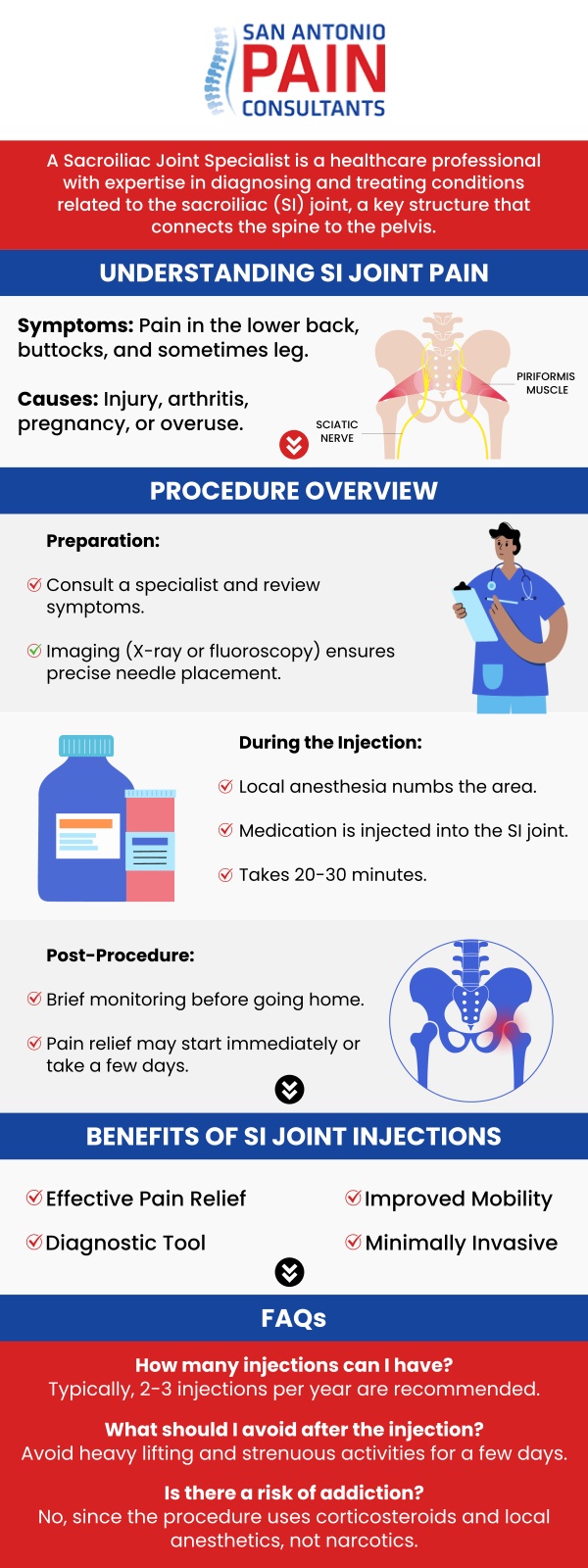
Table of Contents:
What is sacroiliitis?
What happens when the sacroiliac joint becomes inflamed?
Where is the sacroiliac joint located?
How does sacroiliitis cause lower back and hip discomfort?
What are the signs and symptoms of sacroiliitis?
Can sacroiliitis cause pain in the lower back, buttocks, or legs?
Does sacroiliitis cause stiffness or difficulty with movement?
When should I seek care for possible sacroiliac joint problems?
What can lead to inflammation of the sacroiliac joint?
Can arthritis contribute to sacroiliitis?
Can pregnancy or changes in the pelvis contribute to sacroiliac joint pain?
Are there conditions that increase the risk of developing sacroiliitis?
How do doctors diagnose sacroiliitis?
What happens during a sacroiliitis evaluation?
Are imaging tests used to diagnose sacroiliac joint inflammation?
How do providers determine if symptoms are related to the sacroiliac joint?
How is sacroiliitis treated?
Can physical therapy help improve sacroiliitis symptoms?
What approaches may help reduce sacroiliac joint discomfort?
How does personalized sacroiliitis treatment support mobility?
Where can I find specialized sacroiliitis care near SeaWorld San Antonio?
Sacroiliitis is inflammation affecting one or both sacroiliac joints. These joints connect the lower portion of the spine to the pelvis and help transfer weight between the upper body and the legs. When a sacroiliac joint becomes irritated, it can produce pain around the lower back, buttocks, hips, or upper legs.
Inflammation can make the tissues within and around the sacroiliac joint swollen, sensitive, and painful. Movements that transfer pressure across the pelvis may then irritate the affected area, producing a dull ache, sharp pain, or stiffness.
The muscles surrounding the lower back, hips, and pelvis may also tighten to protect the painful joint. This protective response can further restrict movement and make activities such as walking, bending, standing from a seated position, or turning the hips more difficult.
The body has two sacroiliac joints, with one positioned on each side of the lower spine. Each joint is located where the sacrum—the triangular bone at the bottom of the spine—meets the ilium, which forms the upper part of the pelvis.
These joints are positioned deep within the lower back and buttock region. Although they permit only a small amount of movement, they play an important role in absorbing forces and transferring weight from the spine through the pelvis to the legs.
The sacroiliac joints are involved whenever a person shifts weight, walks, rotates the hips, or changes position. When one or both joints are inflamed, pressure from these movements may activate nearby pain-sensitive tissues.
Pain may remain near the joint or spread into the buttock, hip, groin, thigh, or leg. The location and intensity can vary, which is one reason sacroiliitis may be mistaken for a lumbar spine condition, hip disorder, or irritated nerve.
Lower back or buttock pain is one of the most common symptoms of sacroiliitis. The discomfort may feel like a persistent ache, localized tenderness, burning sensation, or sudden sharp pain during certain movements.
Symptoms may worsen after prolonged sitting or standing, climbing stairs, taking long strides, rotating the hips, or placing more weight on one leg. Some people also experience morning stiffness or discomfort after remaining in the same position for an extended period.
Sacroiliitis can cause pain across the lower back and may affect one or both buttocks. Discomfort can also extend into the hip, groin, thigh, or leg, depending on which tissues are irritated and how the inflammation affects surrounding structures.
Sacroiliitis may cause stiffness after sleeping, sitting, driving, or remaining inactive. Morning stiffness can sometimes last longer than the brief tightness people commonly experience after waking.
A medical evaluation should be considered when lower back, buttock, or hip pain persists, repeatedly returns, limits movement, interferes with sleep, or makes normal activities difficult. Early assessment can help identify whether the discomfort comes from the sacroiliac joint or another structure.
Sacroiliitis can develop when disease, physical stress, or changes in pelvic movement irritate the joint. Possible contributors include inflammatory arthritis, age-related joint changes, altered walking patterns, repetitive stress, differences in leg length, or increased pressure across the pelvis.
Arthritis is a significant cause of sacroiliac joint inflammation. Sacroiliitis is commonly associated with forms of inflammatory arthritis, particularly ankylosing spondylitis and related conditions within the spondyloarthritis family.
Pregnancy can affect the sacroiliac joints because hormonal changes allow the ligaments around the pelvis to become more flexible. Changes in body weight, posture, walking patterns, and the position of the pelvis can also increase stress across these joints.
Conditions associated with systemic inflammation can increase the likelihood of sacroiliitis. These include ankylosing spondylitis, psoriatic arthritis, reactive arthritis, Crohn’s disease, ulcerative colitis, and certain other inflammatory disorders.
Diagnosis usually begins with a discussion of the patient’s symptoms, including where the pain occurs, when it started, and which activities make it better or worse. The provider may also review inflammatory conditions, previous treatments, pregnancy history, and other medical concerns.
During the evaluation, the provider may press over the sacroiliac joint and ask the patient to perform movements that place controlled pressure across the pelvis. These maneuvers help determine whether the familiar pain can be reproduced.
Imaging may be recommended when the examination suggests sacroiliac joint inflammation or when another condition needs to be excluded. X-rays can reveal certain structural or arthritic changes, while CT scans provide detailed images of the bones.
Providers compare the location and pattern of pain with findings from several physical examination maneuvers. Symptoms that are reproduced when controlled pressure is placed across the sacroiliac region may increase suspicion that the joint is involved.
Treatment depends on the cause, severity, duration, and effect of the symptoms on daily activities. Initial care may include temporary activity modification, physical therapy, appropriate pain-relieving or anti-inflammatory medication, and measures that reduce stress across the joint.
Physical therapy is commonly used to improve sacroiliitis symptoms. A therapist may design exercises that strengthen the abdominal, gluteal, hip, and pelvic muscles responsible for stabilizing the sacroiliac region.
Temporary reduction of aggravating activities may give an irritated joint time to settle. Depending on the patient’s condition, heat or cold therapy, low-impact movement, posture changes, physical therapy, and clinician-approved medications may help control discomfort.
Personalized treatment addresses the movements and activities that are most difficult for the individual patient. One person may primarily struggle with sitting, while another may experience pain when walking, climbing stairs, exercising, or turning in bed.
Patients seeking specialized sacroiliitis care near SeaWorld San Antonio can visit San Antonio Pain Consultants. Dr. Darius Zagunis, M.D., is fellowship-trained and board-certified in Anesthesiology and Pain Management, with experience evaluating and treating chronic lower back and sacroiliac joint pain. For more information, contact us today or book an appointment. We are conveniently located at 3903 Wiseman Blvd, Ste 117, San Antonio, TX 78251. We serve patients from San Antonio TX, Helotes TX, Alamo Ranch TX, Leon Valley TX, Shavano Park TX, Balcones Heights TX, Fair Oaks TX, Fair Oaks Ranch TX and Castroville TX.
Check Out Our 5 Star Reviews



Conditions We Treat
▸ Back & Spine Pain
▸ Herniated Disc Treatment
▸ Sciatica
▸ Neck Pain
▸ Knee Pain
▸ Arthritis Pain
▸ Arm & Shoulder Pain
▸ Abdominal & Pelvic Pain
▸ Headaches & Migraines
▸ Hip Pain
▸ Neuropathy
▸ Cancer Pain


 Send Text
 How May I Help You?